Wound Care Certification Study Guide PDF: A Comprehensive Plan
Navigating wound care demands specialized knowledge; a comprehensive study guide, often in PDF format, is crucial for professionals seeking certification and enhanced patient outcomes.
Wound care certification signifies a commitment to advanced practice and specialized knowledge in a rapidly evolving field. Professionals pursue certification to elevate patient care, address the increasing prevalence of chronic wounds – like diabetic ulcers and pressure injuries – and meet growing healthcare demands.
A robust study guide, frequently available as a PDF, forms the cornerstone of successful certification preparation. These guides, such as those developed alongside resources like the WoundDoctor App, consolidate essential information, bridging theoretical understanding with practical application.
Certification isn’t merely about passing an exam; it’s about mastering core concepts, understanding wound etiology, and applying evidence-based guidelines for optimal healing. Resources from organizations like the International ATMO and The College of Long Term Care are invaluable.
Effective wound management requires continuous learning; certification courses and study guides, like those offered by Aalwm, support clinicians throughout their journey.
II. Understanding Wound Care Certifications
Wound care certifications validate specialized knowledge and skills essential for optimal patient outcomes. These credentials demonstrate a commitment to evidence-based practices, encompassing wound assessment, management, and prevention of complications. Several organizations offer certifications, each with unique focuses and requirements, ranging from basic wound care to advanced modalities like Negative Pressure Wound Therapy (NPWT) and Hyperbaric Oxygen Therapy (HBOT).
A comprehensive study guide PDF is invaluable for preparing for these exams, consolidating core concepts, and ensuring a thorough understanding of wound etiology, dressing selection, and infection control. Skilled Wound Care and The College of Long Term Care collaborate to provide robust educational resources. Certification isn’t merely a credential; it signifies a dedication to providing high-quality, specialized care within the evolving landscape of wound management.
III. Benefits of Wound Care Certification
Achieving wound care certification offers numerous advantages for healthcare professionals. It demonstrably enhances clinical expertise, leading to improved patient outcomes through evidence-based practices and reduced healing times. Certification often translates to increased job opportunities and earning potential, recognizing specialized skills in a growing field.
Utilizing a detailed study guide PDF streamlines the preparation process, ensuring comprehensive coverage of crucial topics like wound assessment, microbiology, and advanced therapies. Professionals gain confidence in their abilities, contributing to better coordinated care across disciplines. Furthermore, certification reflects a commitment to professional development and adherence to ethical standards, ultimately elevating the quality of wound care provided.

Wound care certification empowers clinicians with focused knowledge, improving patient healing and care quality, often supported by accessible PDF study resources.
IV. Key Organizations Offering Wound Care Certification
Several prominent organizations provide wound care certification, each with unique focuses and requirements. The International ATMO (Association for the Advancement of Wound Care and Tissue Management Organization) offers comprehensive programs, often supported by detailed study guides, including PDF versions, for exam preparation. Skilled Wound Care, in collaboration with The College of Long Term Care, presents another avenue for certification, emphasizing practical application and often utilizing accessible online resources.
Furthermore, organizations like the Wound Care Education Institute (WCEI) and various nursing specialty boards offer certifications. These programs frequently include Wocnb-reviewed materials and evidence-based guidelines. Accessing a well-structured wound care certification study guide PDF is vital for success, as these resources consolidate essential knowledge and prepare candidates for the complexities of wound management and billing procedures.
V. Choosing the Right Certification Program
Selecting the appropriate wound care certification program requires careful consideration of your professional goals and practice setting. Evaluate the program’s accreditation, curriculum content, and the availability of comprehensive study materials, ideally including a detailed wound care certification study guide PDF. Consider whether the program aligns with your specialty – long-term care, surgical wounds, or general nursing.
Assess the program’s cost, CE hour offerings (up to 60 are available), and access to resources like the WoundDoctor App. A robust PDF study guide should cover wound assessment, debridement techniques, dressing selection, and infection control. Prioritize programs offering 24/7 course access and evidence-based guidelines, ensuring you’re well-prepared for the certification exam and equipped to deliver optimal patient care.
Effective wound management relies on continuous learning; a well-structured wound care certification study guide PDF is a vital tool for healthcare professionals.
VI. Core Concepts in Wound Care
A robust understanding of core wound care concepts forms the bedrock of successful certification preparation. These fundamentals, detailed within comprehensive study guides, encompass principles of wound healing – inflammation, proliferation, and maturation – alongside crucial elements like perfusion, moisture balance, and infection prevention.
Essential topics include wound bed preparation, utilizing techniques to create an optimal environment for healing. Mastering these concepts requires familiarity with diverse wound etiologies, from pressure injuries to diabetic ulcers, and the appropriate application of evidence-based guidelines.
Study materials often emphasize goal-setting and systemic assessment, ensuring holistic patient care. A quality PDF study guide will thoroughly cover these areas, preparing candidates for the complexities of real-world wound management scenarios and the certification exam itself.

VII. Wound Assessment & Documentation
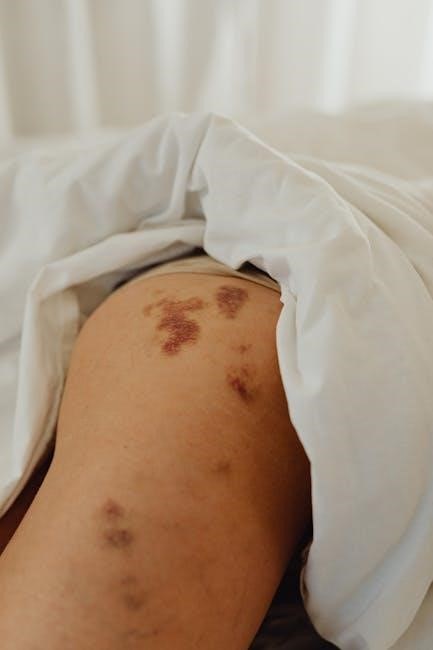
Precise wound assessment and meticulous documentation are cornerstones of effective care, heavily emphasized in wound care certification study guides. These guides detail standardized assessment tools, focusing on wound characteristics like location, size, depth, tissue type, and exudate.
Comprehensive documentation isn’t merely descriptive; it must reflect changes over time, treatment responses, and any complications. Accurate records are vital for communication between healthcare professionals and legal defensibility.
PDF study resources often include case studies and practical exercises to hone assessment skills. Mastering photographic documentation, utilizing validated scales, and understanding proper charting techniques are crucial for certification success and optimal patient outcomes.
VIII. Wound Etiology and Types
Wound care certification study guides dedicate significant attention to understanding the diverse causes – etiology – and classifications of wounds. These resources detail the pathophysiology behind pressure injuries, venous ulcers, arterial ulcers, diabetic foot ulcers, and traumatic wounds.
PDF materials emphasize differentiating between wound types based on their underlying mechanisms and clinical presentation. Understanding contributing factors like vascular insufficiency, neuropathy, and infection is paramount.

Effective management hinges on accurate diagnosis; guides often include detailed charts and comparative analyses. Certification preparation requires mastering the characteristics of each wound type to select appropriate interventions and promote healing.
Certification study guides, frequently available as PDFs, equip healthcare professionals with essential knowledge for optimal wound management and improved patient care.
IX. Principles of Wound Bed Preparation
Effective wound healing fundamentally relies on meticulous wound bed preparation, a cornerstone emphasized within wound care certification study guides. This process involves creating an optimal environment to facilitate cellular activity and tissue regeneration. Key principles include addressing underlying issues like infection and edema, and removing non-viable tissue through debridement techniques – sharp, enzymatic, autolytic, or mechanical.
Study guides detail the importance of moisture balance, maintaining a slightly moist wound bed conducive to epithelialization. Appropriate wound cleansing, utilizing solutions compatible with wound tissue, is also crucial. Furthermore, guides highlight the significance of protecting the periwound skin to prevent maceration and promote healing. Understanding these principles, often detailed in PDF resources, is vital for successful certification and improved patient outcomes, as evidenced by resources from organizations like the World Care Certification.
X. Wound Cleansing & Debridement Techniques
Wound care certification study guides extensively cover wound cleansing and debridement, critical components of effective wound management. Cleansing aims to remove debris and contaminants without damaging viable tissue, utilizing solutions like normal saline. Guides emphasize avoiding cytotoxic agents like hydrogen peroxide.
Debridement, the removal of non-viable tissue, is categorized into sharp (surgical), enzymatic, autolytic, and mechanical methods. PDF resources detail the indications and contraindications for each technique. Proper technique is paramount to prevent trauma and infection. The WoundDoctor App and associated study guides highlight the importance of assessing wound characteristics to select the appropriate debridement method. Mastering these skills, as detailed in comprehensive study materials, is essential for certification and optimal patient care.
XI. Selecting Appropriate Wound Dressings
Wound care certification study guides dedicate significant attention to wound dressing selection, a cornerstone of effective healing. These resources emphasize that no single dressing suits all wounds; choice depends on wound characteristics – depth, exudate level, infection status, and surrounding skin condition.
PDF materials detail various dressing types: foams, hydrocolloids, hydrogels, alginates, films, and antimicrobial dressings. They explain each dressing’s mechanism of action and appropriate applications. Byram wound dressings are often referenced as examples. Guides stress the importance of maintaining a moist wound environment and protecting the wound bed. Understanding these principles, as outlined in comprehensive study guides, is vital for successful certification and improved patient outcomes.
Certification preparation necessitates focused study; a well-structured PDF guide streamlines learning complex wound care concepts, boosting exam confidence and clinical skills.
XII. Advanced Wound Care Modalities
Delving into advanced techniques is vital for comprehensive wound management, and a robust study guide PDF should cover these extensively. These modalities move beyond traditional care, offering solutions for complex, chronic wounds. Key areas include Negative Pressure Wound Therapy (NPWT), utilizing controlled suction to promote healing, and Hyperbaric Oxygen Therapy (HBOT), increasing oxygen levels in tissues to accelerate recovery.
Understanding the indications, contraindications, and proper application of each modality is paramount. The study guide should detail NPWT dressing selection, pressure settings, and potential complications. For HBOT, it should explain the physiological effects of increased oxygenation and patient safety protocols. Furthermore, exploring bioengineered skin substitutes and growth factors provides a holistic view of advanced wound care options, preparing professionals for diverse clinical scenarios.
XIII. Negative Pressure Wound Therapy (NPWT)
A detailed study guide PDF must thoroughly address Negative Pressure Wound Therapy (NPWT), a cornerstone of advanced wound care. NPWT utilizes controlled suction to remove exudate, promote granulation tissue formation, and protect the wound bed. The guide should cover various NPWT systems, including traditional and single-use devices, detailing their mechanisms and appropriate applications.
Crucially, the PDF should emphasize proper wound assessment for NPWT candidacy, dressing selection based on wound characteristics, and meticulous monitoring for complications like bleeding or infection. Understanding pressure settings, foam configuration, and troubleshooting common issues are essential. Furthermore, the guide should outline NPWT’s role in different wound types – diabetic ulcers, pressure injuries, and surgical wounds – preparing clinicians for effective implementation.
XIV. Hyperbaric Oxygen Therapy (HBOT)
A robust wound care certification study guide PDF necessitates a comprehensive section on Hyperbaric Oxygen Therapy (HBOT). This advanced modality involves exposing patients to 100% oxygen at increased atmospheric pressure, stimulating tissue oxygenation and promoting healing, particularly in hypoxic wounds. The guide should detail the physiological mechanisms underlying HBOT’s benefits, including angiogenesis and enhanced immune function.
Essential content includes indications for HBOT – diabetic foot ulcers, radiation injuries, and compromised flaps – alongside contraindications like pneumothorax. The PDF must cover HBOT protocols, potential side effects (oxygen toxicity), and patient safety considerations. Understanding chamber operation, pre- and post-treatment assessments, and appropriate wound care integration are vital for certified professionals. Case studies illustrating successful HBOT applications would further enhance comprehension.
Effective wound care certification relies on detailed study guides, often in PDF format, covering assessment, treatment, and evolving best practices for optimal healing.
XV. Infection Control in Wound Care
Maintaining a sterile environment and understanding infection control protocols are paramount in wound care, and a robust study guide PDF will emphasize this. Professionals must grasp microbiology basics – identifying bacteria, understanding transmission routes, and recognizing signs of infection. The guide should detail proper hand hygiene, aseptic techniques during dressing changes, and appropriate personal protective equipment (PPE) usage.

Crucially, the PDF will cover recognizing wound infection indicators like increased pain, redness, swelling, purulent drainage, and fever. It will also outline appropriate interventions, including wound cultures, antibiotic administration (following physician orders), and diligent wound cleansing. Effective infection control minimizes complications, promotes healing, and safeguards both patients and healthcare providers, making it a core component of certification preparation.
XVI. Microbiology of Wound Infections
A comprehensive wound care certification study guide PDF dedicates significant attention to microbiology. Understanding the types of microorganisms commonly found in wounds – bacteria (like Staphylococcus aureus, Pseudomonas aeruginosa), fungi, and viruses – is essential. The guide details bacterial characteristics, including Gram-positive versus Gram-negative distinctions, and their impact on wound healing.
Furthermore, it explores concepts like biofilm formation, antibiotic resistance, and the role of the host immune response. The PDF should explain how different wound environments (e.g., ischemic, neuropathic) favor specific microbial growth. Knowledge of these microbiological principles informs appropriate debridement, dressing selection, and antibiotic therapy, ultimately improving patient outcomes and demonstrating competency for certification.

XVII. Recognizing and Managing Wound Infections
A robust wound care certification study guide PDF thoroughly covers recognizing and managing wound infections. It details clinical signs – increased pain, redness, edema, purulent drainage, delayed healing, and systemic symptoms like fever. The guide emphasizes differentiating between colonization, critical colonization, and infection, crucial for appropriate intervention.
Management strategies detailed within the PDF include wound cleansing, debridement to remove necrotic tissue harboring bacteria, appropriate antimicrobial therapy guided by wound cultures, and diligent wound protection. It stresses the importance of monitoring for antibiotic resistance and implementing infection control protocols. The study guide prepares candidates to assess, diagnose, and effectively manage infected wounds, a core competency for certification.
Effective wound care certification relies on detailed study guides, often available as PDFs, covering assessment, treatment, and evolving best practices for optimal healing.
XVIII. Wound Care Billing and Coding
Accurate billing and coding are paramount in wound care, demanding a thorough understanding of Current Procedural Terminology (CPT) codes and proper documentation. A robust wound care certification study guide PDF will dedicate significant attention to this complex area, detailing codes for debridement, dressings, negative pressure wound therapy (NPWT), and other advanced modalities.
Furthermore, the guide should clarify the nuances of Local Coverage Determinations (LCDs) and National Coverage Determinations (NCDs) impacting reimbursement. Professionals must learn to justify medical necessity and avoid claim denials. Understanding modifiers, bundling rules, and the impact of wound etiology on coding are also essential. Proper coding ensures appropriate reimbursement for services rendered, contributing to the financial sustainability of wound care programs and ultimately, patient access to quality care.
XIX. Legal and Ethical Considerations in Wound Care
A comprehensive wound care certification study guide PDF must address the legal and ethical landscape of practice. This includes informed consent procedures for procedures like debridement and advanced therapies, ensuring patients understand risks and benefits. Furthermore, it should cover documentation requirements to protect both the patient and the provider, emphasizing accuracy and completeness.
The guide should also explore issues of patient autonomy, confidentiality, and the duty to provide competent care. Ethical dilemmas, such as end-of-life considerations and resource allocation, require careful consideration. Understanding legal precedents related to wound care, and adhering to professional codes of ethics, are vital for responsible practice and minimizing legal risks.
Effective wound management relies on current knowledge; a well-structured PDF study guide is essential for certification preparation and continuing education for professionals.
XX. Resources for Wound Care Professionals (PDF Study Guides)
Numerous resources support wound care professionals pursuing certification, with PDF study guides being particularly valuable. Organizations like the International ATMO offer comprehensive materials, as evidenced in resources like the “World Care Certification Study Guide” by Anstead and Shah (2015).
These guides often incorporate evidence-based guidelines addressing crucial facets of wound care nursing, including goal-setting and systemic assessment. Skilled Wound Care and The College of Long Term Care collaborate to provide educational resources.
Furthermore, the WoundDoctor App and associated study guides aid in problem wound management. Accessing Wocnb-reviewed classes and Byram’s wound dressing information supplements learning. Aalwm provides structured learning pathways in lymphatic therapy and wound management, enhancing clinical skills and knowledge.

XXI. Recertification Requirements & Continuing Education
Maintaining wound care certification necessitates ongoing professional development. Recertification often requires accumulating Continuing Education (CE) hours, with some programs offering up to 60 CE hours with 24/7 course access.
Utilizing comprehensive wound care classes, like those reviewed by the Wocnb, ensures professionals stay current with evidence-based practices. Regularly reviewing updated study guides, potentially in PDF format, is crucial.
Resources from organizations like the International ATMO and materials developed by experts like Anstead and Shah (2015) remain valuable. Staying informed about advanced modalities like NPWT and HBOT, alongside infection control protocols, is essential for continued competence and optimal patient care.

Be First to Comment